
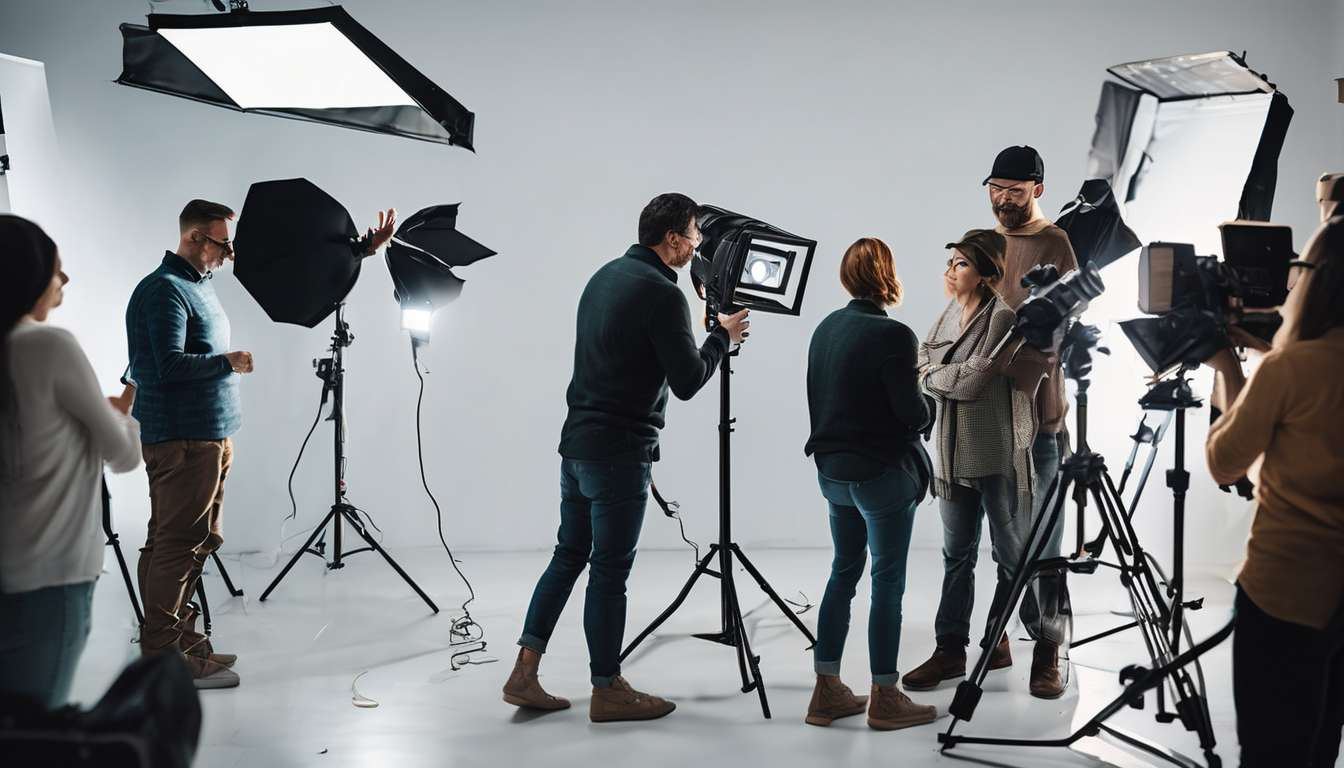
Knowledge is the flashlight that guides our hands when light is scarce, and as we train together, that light grows brighter.
We have seen how structured training programs transform adult photography production teams from scattered enthusiasts into cohesive creative units, sharpening technical skills while nurturing collaborative rhythms.
We commit to building curricula that balance technical craft and soft skills.
- Camera craft
- Lighting theory
- Workflow management
- Communication and leadership
We design hands-on learning experiences so participants move from concept to polished deliverable with confidence.
- Hands-on modules
- Peer review sessions
- Real-world briefs
We measure progress and iterate to meet diverse learning styles and career goals.
- Portfolio growth
- Production metrics
- Team feedback
We celebrate incremental wins and troubleshoot bottlenecks, recognizing that adult learners bring experience that enriches instruction.
By investing in tailored training, we empower production teams to produce higher-quality imagery, streamline operations, and sustain creative momentum across projects and seasons.
Learning Objectives
We will define clear, measurable learning objectives that outline the technical, creative, and safety competencies our adult photography team must achieve.
Technical proficiency targets will specify measurable levels for studio lighting setups and color control:
- Studio lighting setups: establish proficiency levels for key, fill, and rim lighting (e.g., Beginner = set and balance a simple 2‑light key/fill; Proficient = execute 3‑light key/fill/rim with exposure +/- 1/3 stop consistency).
- Color balance: define targets for consistent white balance and color accuracy (e.g., target delta E, use of gray cards, and camera/monitor calibration checkpoints).
Creative goals will be explicit and assessable:
- Narrative composition: ability to craft images that communicate a clear story or concept.
- Directing subjects with respect: techniques for giving clear, empathetic direction while maintaining subject agency and comfort.
- Cohesive series production: create short series (3–5 images) that demonstrate a consistent voice, mood, and visual language.
Safety and consent objectives will be formalized and auditable:
- Consent protocols: standardized consent forms and verbal consent scripts.
- Privacy safeguards: procedures for handling, storing, and sharing images to protect identities and personal data.
- On‑set emergency procedures: clear steps for medical or other emergencies and assigned roles.
- Verification: all safety items tracked with checklists for audit and sign‑off.
Workflow automation targets will include measurable efficiency improvements:
- Set up tethered capture workflows.
- Implement and use consistent preset processing.
- Use batch exporting and delivery pipelines.
- Metrics: assign percent‑reduction targets for repetitive task time (for example, reduce manual processing time by 40% within 3 months).
Team collaboration and role clarity will be defined and documented:
- Roles and handoffs: clear role descriptions, responsibilities, and handoff checklists.
- Feedback loops: structured feedback sessions, preferred communication channels, and respect guidelines to keep interactions efficient and inclusive.
Assessment methods will be varied, objective, and pass/fail tied where appropriate:
- Observed shoots: instructor or senior reviews during live sessions.
- Peer reviews: structured critique rounds using rubrics.
- Short practical exams: timed tasks demonstrating core competencies.
- Grading: each assessment mapped to pass/fail criteria aligned with the proficiency levels.
Outcomes and tracking will ensure objectives are concrete, shared, and traceable:
- Publish the objectives and rubrics to a shared repository.
- Use checklists, logged assessments, and periodic review meetings to track progress.
- Regularly review targets and metrics so the team knows how they contribute and how we’ll grow together.
Technical Foundations
We’ll build a solid technical foundation by mastering camera systems, exposure mechanics, color management, and essential lighting principles.
Key goals:
- Standardize gear choices and settings so everyone feels confident using our cameras and lenses.
- Provide clear checklists to make learning inclusive and reduce anxiety.
- Demystify exposure — aperture, shutter, ISO relationships, and metering strategies — so teammates can make consistent decisions on set.
Camera & exposure standards:
- Document approved camera bodies, lenses, mounts, and common accessories.
- Define baseline settings (codecs, resolution, frame rates) for typical shoot types.
- Teach aperture/shutter/ISO interactions and provide example exposure scenarios.
- Establish metering strategies (spot, center-weighted, matrix) and when to use each.
- Create quick-reference checklists for on-set camera setup and troubleshooting.
We’ll create color-managed workflows that keep tones accurate from capture to deliverable.
Color-management tasks:
- Document camera and monitor profiles, preferred color spaces, and LUT usage.
- Define tethering procedures and capture-referred QA steps.
- Schedule and record calibration routines for cameras, monitors, and projectors.
- Store and version-control ICC/LUT files and profile documentation.
We’ll integrate studio lighting fundamentals focused on safe, repeatable setups and power management.
Lighting fundamentals:
- Teach basic light types (continuous, strobe, LED) and their typical uses.
- Define safe rigging practices, grip equipment lists, and weight/power limits.
- Provide repeatable setups for common scenes (three-point, hair/light separation, fill ratios).
- Document power distribution, cable management, and generator/UPS protocols.
We’ll adopt workflow automation for file naming, backups, and batch edits to free time for creative work.
Automation and data management:
- Standardize file-naming conventions and folder structures.
- Implement automated ingest with checksums and versioned backups.
- Create batch-edit presets for common corrections and deliverable exports.
- Define retention and archival policies.
We’ll practice communication protocols and handoffs that prioritize team collaboration and predictable processes.
Team collaboration protocols:
- Assign clear responsibilities for each role (camera, data, lighting, color, edit).
- Produce concise SOPs and where to find them (shared drive, wiki).
- Use standardized call sheets, change logs, and daily wrap reports.
- Run regular cross-role rehearsals and debriefs to refine procedures.
Outcome: By standardizing gear, exposure, color, lighting, automation, and communication, the team gains shared competence, reduced anxiety, and predictable processes that foster collaboration and belonging.
Lighting Mastery
We’ll master practical lighting techniques that balance creativity, safety, and repeatability so every shoot delivers consistent, controllable results.
We practice setting key, fill, and rim lights to sculpt subjects while keeping modifiers, grip, and stands secured to prevent accidents.
In hands-on sessions we rotate roles so everyone understands power distribution, color temperature, and safe cable management in studio lighting setups.
We document preferred setups with diagrams and exposure notes so new members feel welcomed and confident.
We pair technical drills with collaborative critiques that strengthen team collaboration:
- One person calls light ratios.
- Another checks shadows.
- We all agree on adjustments.
We teach portable solutions for location work, adapters for dimmers, and safe battery practices, ensuring inclusivity across experience levels.
We introduce simple triggers and synced TTL for consistent outcomes without sacrificing artistry.
By focusing on repeatable practices and shared responsibility, we create a reliable, creative environment where each member belongs and contributes to dependable, expressive lighting on every shoot.
Workflow Systems
We’ll establish clear, repeatable workflow systems that map pre-production, on-set, and post-production tasks so everyone knows responsibilities, timelines, and handoffs.
We design templates that reflect our studio lighting setups, gear checklists, shot lists, and client notes so newcomers feel included and seasoned members stay aligned.
We pair those templates with workflow automation for file naming, metadata insertion, and backup routines to reduce busywork and errors.
We define decision points and escalation paths so each person understands when to act and when to ask for support, which builds trust and belonging.
We document version control, color grading choices, and export presets so post-production runs predictably.
We schedule regular reviews of the system, inviting feedback to refine steps and remove bottlenecks.
We train everyone on the tools that enable team collaboration—shared calendars, task boards, and real-time review platforms—so communication stays concise and responsibilities remain visible.
This keeps our productions smooth, consistent, and welcoming to every team member.
Collaborative Practices
We’ll establish clear collaborative practices that define how we plan, communicate, and make decisions together across pre-production, on-set, and post-production.
We set shared expectations for roles, call times, safety, and consent so every member feels seen and secure.
We use concise briefs and shared shot lists that tie studio lighting setups to narrative goals, so technicians and creatives align quickly.
We centralize communications to reduce friction and build trust.
- Daily standups
- Annotated call sheets
- A single channel for urgent changes
We integrate workflow automation for file transfers, versioning, and approvals, which frees us to focus on creative problem-solving and mentorship.
We document decisions and post-mortems so lessons stay with the team, not just individuals.
We encourage feedback loops and paired tasks that foster skill‑sharing, and we rotate responsibilities where possible to deepen understanding.
By committing to transparent processes and intentional team collaboration, we create a steady, inclusive environment where everyone contributes and grows together.
Hands-On Modules
Goal: Build practical skills, mutual respect, and a tighter production team that solves problems together.
Hands-on, inclusive modules.
- We design each session to be hands-on so participants learn by doing.
- Sessions are inclusive, encouraging questions and sharing techniques to make everyone feel welcome.
Role rotation to build breadth and confidence.
- Modules rotate roles:
- Camera operator
- Gaffer
- Grip
- Digital tech
- This rotation builds confidence across positions and strengthens team collaboration.
Short demos paired with immediate practice.
- Brief demos cover core topics such as studio lighting setups.
- Immediate practice shows how small adjustments change mood and exposure.
Workflow automation exercises.
- We integrate exercises that teach:
- Efficient file handling
- Metadata tagging
- Simple scripts to reduce busywork
- Emphasis is on automation that improves efficiency without excluding input from any team member.
Timed drills and reflective debriefs.
- Every drill is timed and followed by a debrief.
- Debriefs cover:
- What worked
- Where we stumbled
- How to support one another next time
Small groups and constructive feedback.
- Keeping groups small helps ensure hands-on time for each participant.
- Feedback is constructive, creating a steady path from novice to capable contributor.
Assessment Strategies
Assessment approach — mixed formative and summative methods.
We use a mix of formative and summative assessments to measure skill growth, teamwork, and readiness for real shoots. Practical checkpoints require participants to demonstrate studio lighting setups, capture sequences, and explain choices to peers. Short, frequent reviews provide timely feedback, while graded projects at course milestones confirm competency.
Inclusive, constructive feedback processes.
We keep assessments inclusive so every member feels seen and supported. Peer reviews and self-assessments build trust and reinforce team collaboration. We emphasize constructive language and clear criteria so feedback is balanced and actionable.
Practical exams and role-based evaluation.
Practical exams include:
- Timed setup tasks.
- Problem-solving under constraints.
- Role rotations to assess multiple positions.
These formats test both technical skill and adaptability under pressure.
Workflow and technical integration metrics.
We evaluate how well teams integrate workflow automation into:
- Preproduction.
- Tethered capture.
- Postprocessing pipelines.
Metrics include:
- Setup time.
- File consistency.
- Adherence to brief.
Documentation, rubrics, and reflective review.
We record sessions for reflective review and maintain rubrics that align technical skills with communication and reliability. Together, these strategies measure growth while fostering a shared sense of competence and belonging.
Continuous Development
Continuous development built into the program.
We’ll provide regular skill refreshers, advanced workshops, and personalized growth plans that keep our team current and confident.
Monthly hands-on sessions on studio lighting techniques
- Everyone practices together.
- Team members ask questions and share tips.
- These sessions strengthen our collective craft.
Quarterly deep dives into workflow automation tools
- Streamline repetitive tasks.
- Expand creative time for the whole group.
Mentorship circles with rotating roles
- Encourage team collaboration.
- Promote shared ownership of projects.
- Prevent silos and distribute responsibility.
Progress tracking with clear milestones and short feedback loops
- Celebrate improvements promptly.
- Address gaps quickly to keep momentum.
Elective courses tailored to individual goals
- Technical, managerial, or creative options.
- Support diverse career paths within the team.
Regular peer reviews integrated into routines
- Reinforce learning and belonging.
- Provide practical, timely feedback.
Flexible systems that integrate learning into daily work
- Maintain momentum and boost confidence.
- Ensure the production team evolves together, aligned with both artistic standards and operational efficiency.
What are the costs and typical budget breakdown for running these training programs, including equipment, venue, and instructor fees?
We’re asking about costs and budgets.
Typical allocation percentages:
-
30–40% to equipment — cameras, lighting, backups.
-
20–30% to venue and utilities.
-
20–25% to instructor and staff fees.
-
5–10% to materials and refreshments.
Contingency
- 5% set aside as contingency.
Overall program cost ranges
-
Short course: $3k–$10k depending on scale.
-
Multi-day intensive: can reach $20k+.
Inclusion
- Adjustments will be made to keep everyone included.
How do the programs accommodate participants with disabilities or special needs (accessibility, adaptive equipment, or modified instruction)?
We prioritize accessibility and make sure everyone feels welcome.
We assess needs during signup and provide supports such as:
- ramps,
- captioning,
- quiet spaces, and
- flexible scheduling.
We supply adaptive equipment when needed, including:
- adaptive cameras,
- mounts, and
- one‑on‑one aides.
We train instructors in inclusive teaching and break tasks into manageable steps to support learning.
We invite feedback and adjust curricula based on participant needs.
We cover extra costs through:
- sliding fees, and
- partnerships,
so participation isn’t limited by disability or equipment needs.
Are there certification, accreditation, or continuing education credits awarded upon completion, and are they recognized by industry bodies or employers?
We provide information on whether programs grant certifications, accreditations, or continuing education (CE) credits and whether employers or industry bodies recognize them.
What we typically offer:
- Certificates of completion for learners who finish programs.
- Partnered accreditations through recognized associations.
- CE credits issued via accredited CE providers.
How we ensure relevance and recognition:
- We align credentials with industry standards.
- We list employer partners and industry bodies that accept or recognize the credentials.
Support for learners to demonstrate credentials:
- We help learners showcase credentials on résumés and portfolios.
- We provide guidance so learners feel validated and welcome when presenting their qualifications.
Conclusion
You’ve built a solid foundation for adult photography production teams, mastering technical basics, lighting, workflows, and collaborative practices.
By practicing hands-on modules and using clear assessment strategies, you’ll streamline shoots, elevate quality, and foster ongoing growth.
Keep refining skills, sharing feedback, and updating systems so your team stays efficient and creative.
With consistent development and teamwork, you’ll sustain professional standards and adapt confidently to new challenges and opportunities in production.